
Many of us have a drawer, folder or box at home filled with paperwork we’re not quite sure what to do with. Some of it needs to be kept, and some of it can go in the recycling. However, anything containing personal, financial or sensitive information should be disposed of properly.
Knowing the right documents to shred is important because fraudsters do not always need a full bank account number or passport to cause problems. Sometimes, a name, address, date of birth or account reference can be enough to build a clearer picture of your identity.
In this blog, we’ve rounded up six of the most important types of paperwork to destroy securely when you no longer need them.
1. Old bank statements
Bank statements are one of the most obvious documents to shred, but they are also one of the most common papers people keep for far longer than necessary.
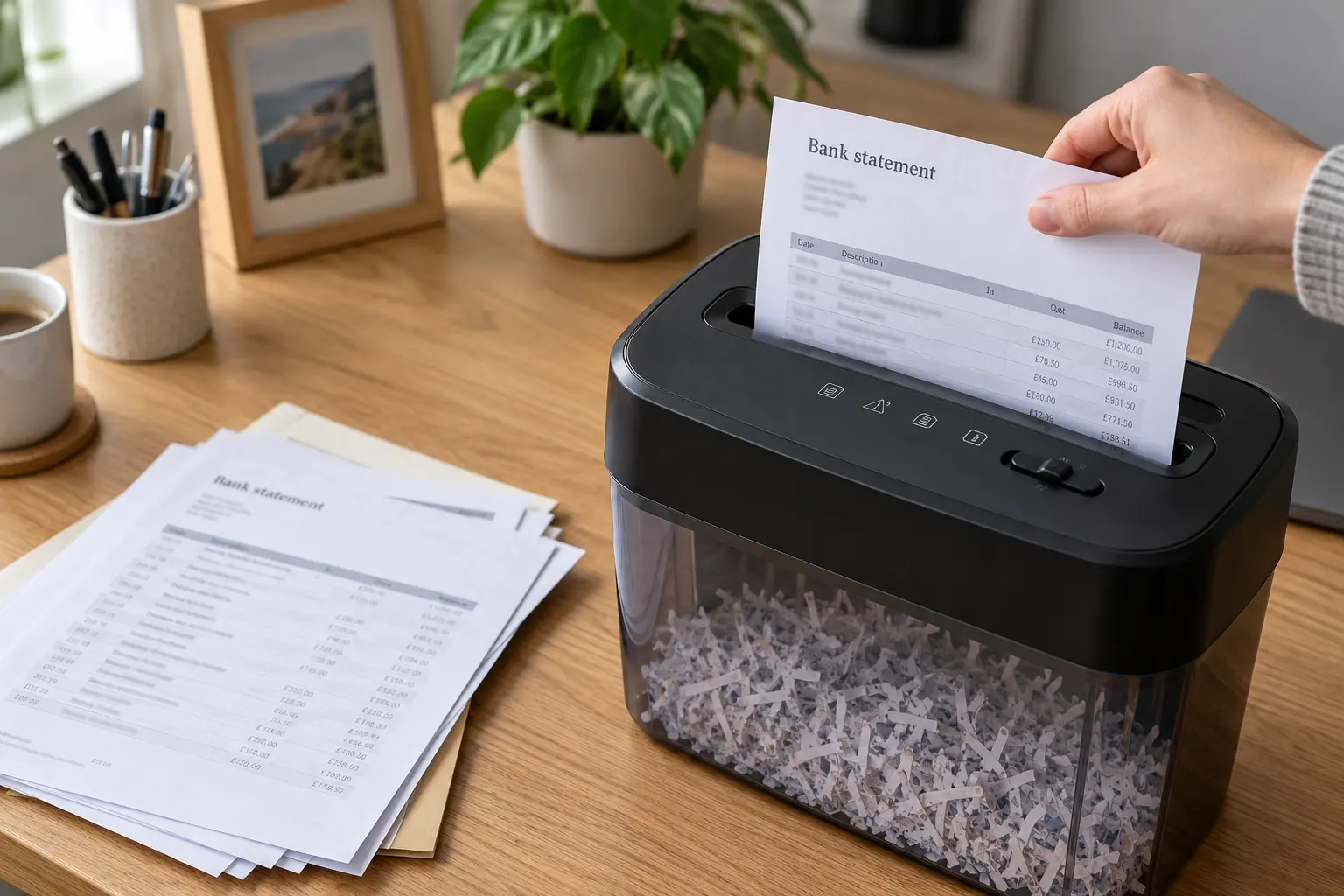
They can include your:
- Full name
- Address
- Account details
- Sort code
- Spending habits
- Direct debit information
If you are wondering how long you should keep bank statements, the answer depends on your circumstances. If you complete a Self Assessment tax return, HMRC says you need to keep records such as bank statements and receipts so you can complete your return correctly.
For people in business, HMRC guidance says records should generally be kept for five years from 31 January following the tax year they relate to. For people not in business, records linked to a tax return are generally kept for one year from 31 January following the tax year, unless there is an enquiry.
For everyday personal banking, many people choose to keep statements for around a year, or longer if they need them for tax, mortgage, loan or proof-of-address purposes. Once you are sure they are no longer needed, shred them rather than placing them in household waste.
2. Utility bills and council tax letters
Old electricity, gas, broadband, mobile phone and council tax bills may not seem especially sensitive, but they often contain more useful information than people realise.
These documents can show:
- Your full name
- Home address
- Account numbers
- Supplier details
- Payment information
- Usage patterns
They are also commonly used as proof of address, which makes them valuable to anyone trying to impersonate you.
If you are having a clear-out, avoid throwing old household bills straight into the bin. Keep any that you genuinely need for proof of address or financial records, then add the rest to your shredding pile.
3. Payslips, P60s and tax documents
Payslips, P60s, tax coding notices and pension letters should be treated carefully because they can include highly personal information.
This might include your:
- Employer details
- Salary
- National Insurance number
- Tax code
- Pension contributions
- Home address
These are exactly the kinds of documents that can help someone build a convincing profile of you.
You should keep tax and employment records for as long as you need them for HMRC, mortgage applications, benefits, pension queries or financial planning. But once they are out of date and no longer required, shredding is the safest option.
4. Medical letters, prescriptions and pharmacy labels
Medical paperwork is easy to overlook, but it can contain sensitive personal information.
Letters from the NHS, private healthcare providers, dentists, opticians and pharmacies may include:
- Your full name
- Date of birth
- NHS or patient numbers
- Medication details
- Appointment information
- Health conditions
Prescription labels are particularly worth watching as they contain details including your name, medication, dosage and pharmacist information.
Before recycling medicine packaging, remove and shred any labels that identify you. The same applies to appointment letters, referral documents and old test results.
5. Receipts, delivery notes and return labels
Receipts, delivery notes and return labels are easy to forget because they feel disposable. But if they include your name, address, order number or partial payment details, they are worth shredding.
This is especially relevant if you shop online regularly. Many parcels arrive with paperwork inside the box or a returns label attached to the packaging.
Before you recycle cardboard boxes or parcel bags, check for:
- Address labels
- Return forms
- Order confirmations
- Receipts
- Barcodes or QR codes linked to your order
Don’t forget about packing slips and return labels, as these are commonly forgotten documents that can include names, addresses and payment details.
A good habit is to remove identifying labels as soon as you open a parcel, then shred them before recycling the packaging.
6. Travel documents, old IDs and CVs
Travel documents can reveal far more than just a destination. Boarding passes, hotel confirmations and travel itineraries may include your name, booking references, loyalty numbers and travel dates.
That can create two risks: someone could use the information to access an account, or it could show when your home is likely to be empty.
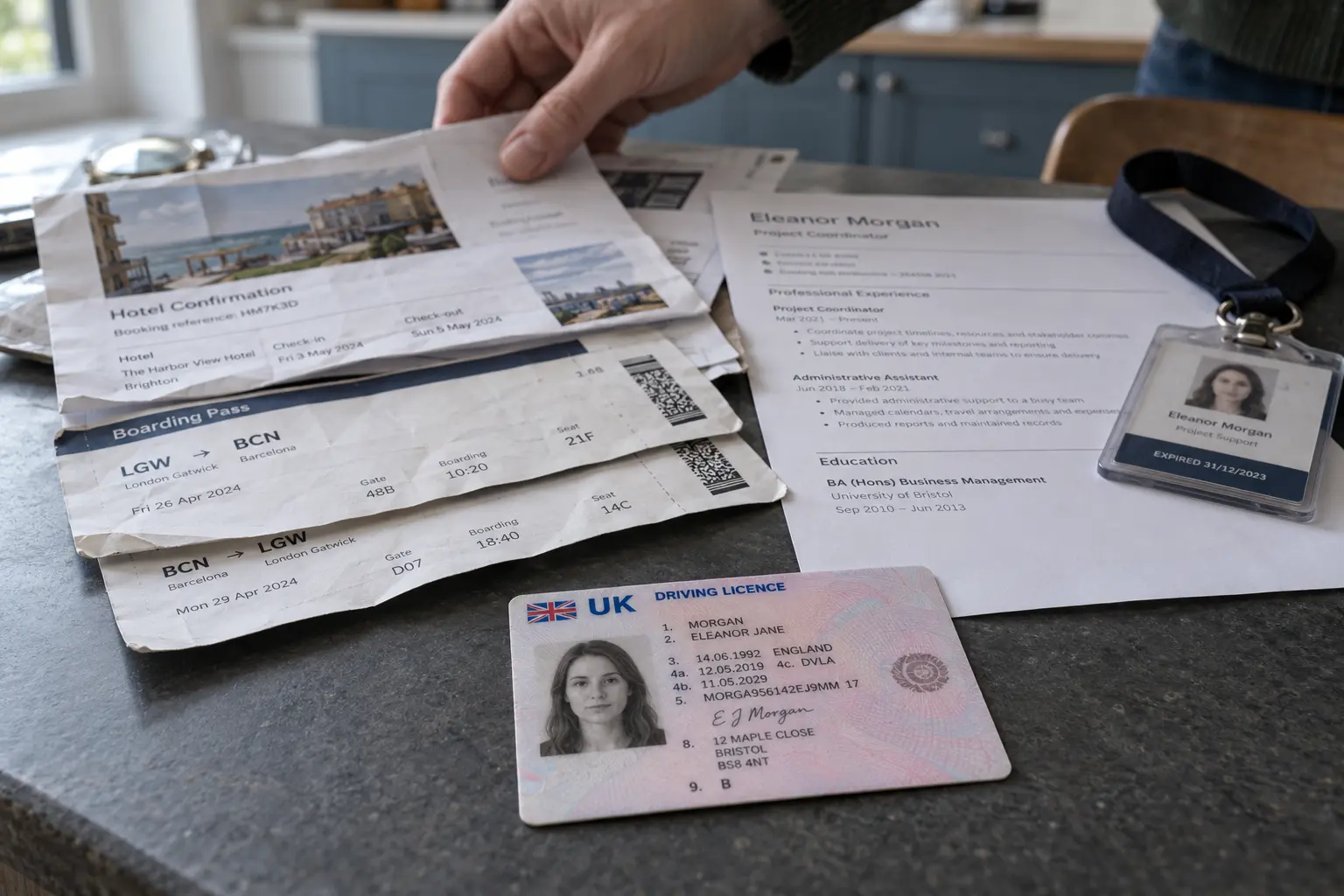
Old CVs are another document to watch. They often include your address, phone number, email address, employment history and education history, giving fraudsters a ready-made profile to impersonate you.
Old workplace passes, expired student cards and visitor badges should also be destroyed securely if they are no longer needed. However, be careful with official identity documents. Do not shred passports or driving licences unless you are certain they are no longer required and you have checked the correct disposal process.
How to shred documents safely
When it comes to sensitive paperwork, tearing a document in half is not enough. The Information Commissioner’s Office says shredding documents rather than putting them in general waste makes it much harder for someone to see information they are not authorised to view.
For small volumes, a home shredder may be enough. For larger clear-outs, it may be worth using a secure shredding service, particularly if you are sorting paperwork during a house move or an office clear-out.
Conclusion
A simple rule to follow regarding shredding documents is: if it contains your name, address, financial information, medical details or anything that could help someone identify you, shred it once you no longer need it.
The key documents to shred include old bank statements, household bills, payslips, medical letters, receipts, delivery labels, travel documents and CVs.
A paperwork clear-out can also be a useful part of a wider home declutter. If you are sorting through boxes before moving house, downsizing or freeing up space at home, separate documents into three piles: keep, shred and recycle.
Anything important but not needed day-to-day can be filed securely, while documents you no longer need should be destroyed properly. That way, you can enjoy a tidier home without putting your personal information at risk.
To learn more about GTW Storage’s paper shredding services, click here or get in touch with our team.